
India's forex reserves increased for the second consecutive week, touching $584.554 billion as of February 26, up by $689 million, the Reserve Bank said on Friday. The overall reserves had increased by $169 million to $583.865 billion in the previous reporting week. The reserves, which have been steadily increasing over the last few months, had touched an all-time high at $590.185 billion for the week ended January 29 this year.

'It makes sense to have gold in one's portfolio keeping the political and economic risks of 2024 in mind.'

The country's foreign exchange reserves rose by $2.518 billion to touch a lifetime high of $575.29 billion in the week ended November 20, RBI data showed on Friday. In the previous week ended November 13, the reserves had surged by $4.277 billion to $572.771 billion. In the reporting week, the increase in the forex kitty was on account of a rise in foreign currency assets (FCAs), a major component of the overall reserves.

The country's foreign exchange reserves fell by $249 million to $583.697 billion in the week ended February 12, RBI data showed on Friday. In the previous week, the reserves had declined by $6.24 billion to stand at $583.945 billion. It had touched a record high of $590.185 billion in the week ended January 29, 2021.

The country's foreign exchange reserves soared by $16.663 billion to touch a lifetime high of $633.56 billion in the week ended August 27, mainly due to an increase in Special Drawing Rights (SDR) holdings, RBI data showed. On Wednesday, RBI had said the International Monetary Fund (IMF) made an allocation of SDR 12.57 billion (equivalent to around $17.86 billion at the latest exchange rate) to India on August 23, 2021. SDR holdings are part of the foreign exchange reserves of a country.

Market participants do not expect any immediate impact on the rupee from the Reserve Bank of India's (RBI's) a "comprehensive" master direction aimed at strengthening the framework for hedging foreign exchange risks. RBI Governor Shaktikanta Das, in his monetary policy statement, revealed that the central bank is poised to issue a master direction to consolidate guidelines for all types of forex transactions. But this development, according to market players, is more of a directional guidance than a mandatory directive.

A statement from the finance ministry said, 'it shall be the policy of the Sri Lankan government to suspend normal debt servicing...shall apply to amounts of affected debts outstanding on April 12, 2022'.

The country's foreign exchange reserves jumped by a massive $7.779 billion to touch a lifetime high of $568.494 billion in the week ended November 6, RBI data showed on Friday. In the previous week ended October 30, the reserves had increased by $183 million to $560.715 billion. In the reporting week, the jump in reserves was mainly on account of an increase in foreign current assets (FCAs), a major component of the overall reserves.

India needs to strengthen its economic growth, says IMF.

The central government is likely to further consolidate its fiscal deficit by 50 basis points (bps) to 5.9 per cent in FY24 from 6.4 per cent in FY23, according to a recent report released by Goldman Sachs on Tuesday. In the current fiscal year, there is going to be an upside of 0.5 per cent on the receipts side due to higher nominal GDP growth, and higher tax buoyancy because of the formalisation, the report said. The upside to expenditure is mainly going to come from incremental subsidies (0.8 per cent of GDP), in both food and fertilizer, it said. The upcoming pre-election Budget will carry forward the trend of the increased capital expenditure seen in recent years.

The country's foreign exchange reserves touched a life time high of USD 555.12 billion after it surged by USD 3.615 billion in the week ended October 16, according to RBI data.

Gold reserves rose by $320 million to $31 billion.

Tactical investors should have an investment horizon of around six months to one year, long-term investors should stick around for 10 years or more.

India's deployment of a direct cash transfer scheme and other similar social welfare programmes is a "logistical marvel", the International Monetary Fund (IMF) said on Wednesday. "From India, there is a lot to learn. There is a lot to learn from some other examples around the world. "We have examples from pretty much every continent and every level of income. "If I look at the case of India, it is actually quite impressive," Paolo Mauro, deputy director of the Fiscal Affairs Department at the IMF, told reporters at a news conference in Washington.

Gold reserves were down by $580 million in the reporting week to $37.440 billion.

'Clients deemed higher-risk are required to update their KYC more frequently.'

China will not be allowed to use the southern port of Hambantota for military purposes, Sri Lankan President Ranil Wickremesinghe has said, apparently attempting to allay fears in India and the United States about China's increasing maritime presence in the strategic Indo-Pacific region.

India should give greater priority to markets and trade liberalisation than to capital market liberalisation, a top official of the International Monetary Fund has said.

Parliamentary Affairs Minister Prahlad Joshi has said that 31 bills will be taken up in the monsoon session. Among these include the Digital Personal Data Protection Bill, 2023.

Among major Sensex movers, ITC rose the most by 1.70 per cent, Wipro by 1.43 per cent, Tech Mahindra by 1.36 per cent and Nestle India by 1.27 per cent. Other gainers included HCL Tech, Asian Paints and Reliance. On the other hand, ICICI Bank, NTPC, UltraTech Cement and Tata Steel traded with a loss of up to 0.82 per cent.

The S&P BSE Midcap and the S&P BSE Smallcap indices have managed to stay afloat in a volatile January that saw the frontline indices hit their respective 52-week high levels and then slip. While the S&P BSE Sensex has lost over 2 per cent thus far in January, the S&P BSE Midcap and the S&P BSE Smallcap indices have gained nearly 2.5 per cent and 4 per cent, respectively during this period.
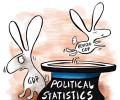
The Economic Survey 2022-23 (FY23), to be presented a day before Union Budget 2023-24 (FY24), is likely to project India's real gross domestic product (GDP) growth between 6 per cent and 7 per cent for FY24, Business Standard has learnt. The broader theme of the Survey could be on how India has dealt with two years of a global pandemic and the ongoing geopolitical disturbance, the strengths and weaknesses that emerged, and what lessons may be learnt. The much-awaited Survey will be the first one by Chief Economic Advisor V Anantha Nageswaran and his team in the finance ministry's economic division.

The International Monetary Fund (IMF) on Tuesday slashed India's growth forecast for 2022-23 (FY23) by 80 basis points to 7.4 per cent, citing less favourable external conditions and rapid policy tightening by the central bank. In its update to the April World Economic Outlook, the IMF said that though a global recession in 2022 was ruled out with a growth estimate of 3.2 per cent, the balance of risks was squarely to the downside, driven by a wide range of factors that could adversely affect the global economic performance. "The risk of recession is particularly prominent in 2023, when in several economies growth is expected to bottom out, household savings accumulated during the pandemic will have declined, and even small shocks could cause economies to stall.

The world is in the face of a devastating impact due to the coronavirus pandemic and has clearly entered a recession, the International Monetary Fund said on Friday, but projected a recovery next year. "We have reassessed the prospects for growth for 2020 and 2021. It is now clear that we have entered a recession as bad or worse than in 2009. We do project recovery in 2021," IMF Managing Director Kristalina Georgieva told reporters at a news conference.

Qin, who recently succeeded Wang Yi, had a phone call at the request of Bilawal on January 9, a Chinese Foreign Ministry statement in Beijing said on Tuesday.

Union Minister Nirmala Sitharaman on Thursday said speaking Hindi gives her 'shivers' and she speaks the language with hesitation.

Prime Minister Sharif will be visiting Beijing with a high-powered delegation from November 1, 2022, where minutes of the joint coordination committee meeting will be signed.

The spike in food prices at the onset of the monsoon season has corroborated the Reserve Bank of India's (RBI's) view that the fight against inflation is far from over, the State of the Economy report of the central bank said. At the same time, the report said that the country is poised to become the fastest-growing major economy in the world, notwithstanding some sequential moderation in economic activity in June. Consumer Price Index (CPI)-based inflation rate increased to 4.8 per cent in June 2023, from 4.3 per cent in May, primarily on account of an increase in food inflation.

Exports had recovered in November to grow at 0.59 per cent from a 12 per cent contraction in October.

It is thanks to the policy of liberalisation conceived by Manmohan Singh and enforced by P V Narasimha that the Indian economy has now become the world's 5th largest economy by nominal GDP, asserts Dr Sudhir Bisht.
Take the rediff business quiz and see how much you know about India and its association with the International Monetary Fund.

India's external debt rose by 8.2 per cent year-on-year to $620.7 billion as of March 2022, which according to the finance ministry is sustainable. While 53.2 per cent of it was denominated in the US dollar, Indian rupee-denominated debt, estimated at 31.2 per cent, was the second largest, as per the status report on India's external debt released by the ministry. "India's external debt continues to be sustainable and prudently managed. As of end-March 2022, it stood at $620.7 billion, growing by 8.2 per cent over the level a year ago.

The country's foreign exchange reserves crossed the $600 billion mark for the first time after increasing by $6.842 billion in the week ended June 4, RBI data showed on Friday. The reserves surged to a record $605.008 billion in the reporting week, helped by a rise in foreign currency assets (FCA), a major component of the overall reserves, as per weekly data by the Reserve Bank of India (RBI). In the previous week ended May 28, 2021, the reserves had swelled by $5.271 billion to $598.165 billion.

Medical education regulator NMC recently notified the "Post-Graduate Medical Education Regulations, 2023" according to which all rounds of counselling for all PG seats will be held online mode by state or central counselling authorities.
India's inflation trajectory in the coming months will be influenced more by the geo-political situation due to the war in Europe and its impact on supply chains and commodity prices. However, the country is better placed than most to "weather the storm" and achieve growth of close to 8 per cent in the current fiscal year, the finance ministry said in its latest monthly economic report on Thursday. "Through the channel of imports, elevated global crude and edible oil prices now have a significant impact on India's inflation outlook. "Government measures to keep the prices of these commodities in check, along with the recent hike in policy rates by the RBI, are expected to temper inflationary pressures in the economy," the monthly economic report for April, drafted by the finance ministry's economic division, said.
Forex reserves include a country's gold holdings and convertible foreign currencies held in its banks, including special drawing rights and exchange reserve balances, with the International Monetary Fund.
Gold reserves were up by $1.525 billion in the reporting week to $37.625 billion.
Gold reserves were down by $1.441 billion in the reporting week to $35.999 billion.
 © 2026 Rediff.com - Advertise with us - Disclaimer - Privacy Policy - Sitemap - Feedback - About us - Terms of use - Grievances